
How to Say Thank You for a Referral
As this posts, I'm still in Minnesota, setting up AI systems for a client, a specialty product brand, building the kind of shared systems that let a marketing, operations, and sales team work from the same knowledge files instead of starting from scratch every time. The point of that work is to support the team, not replace it. This trip happened because someone referred me. That's true for a lot of the work that comes my way. A client tells a friend, a friend tells their sister, and one small mention turns into a whole relationship.
If you run a small business, you already know this pattern. Referrals bring in some of your best clients, the ones who arrive already trusting you because someone they trust vouched for you first. That kind of introduction is worth more than most paid marketing, because the person making it is staking a little of their own reputation on the recommendation. And the person making the introduction isn't always a client. It might be a colleague, a vendor, or someone who has never hired you at all and just believes in what you do. The harder question is what you do next, whoever sent the referral your way. How do you say thank you for a referral in a way that feels real, instead of an afterthought you scramble to handle once the new client is already on the calendar?
This isn't about running a formal referral rewards program with tiers and rules, the kind bigger companies build with a marketing department behind it. It's about a habit any small business owner can start this week, with no software to learn and no minimum spend to justify.
For years, my own answer was the same three options most business owners reach for: a Starbucks card, an Amazon card, or nothing at all, because the week got busy and the moment slipped by. None of those ever felt quite right to me. A gift card assumes I know what someone wants, and most of the time I don't. Some people would rather put the money toward something they need. Some people feel a little strange taking money at all and would rather it go somewhere else entirely. And "nothing at all" is the most common answer of all, not because business owners are ungrateful, but because a proper thank you takes more thought than most of us have room for in a busy week.
Why the usual gift card falls short
A gift card is a guess. You are picking one store, one amount, and one format, and betting that it matches what the other person wants. Sometimes it does. Often it does not, and the card sits in a drawer or gets regifted, which is a strange outcome for something meant to say thank you.
The bigger issue is speed. A referral is a moment. Someone thought of you, said your name to a person they care about, and put their own reputation behind that recommendation. If your response takes two weeks because you had to remember to stop at the store, buy the right card, and mail it, the moment has already passed by the time your thank you arrives. A system that lets you respond the same day the referral comes in keeps the thank you connected to the reason you're sending it.
And then there's the third option, the one that shows up more often than either gift card: nothing at all. Not because the referral wasn't appreciated, but because a proper thank you takes a decision, a purchase, and a follow-through step, and all three compete with everything else already on a small business owner's plate that week. The gap between meaning to thank someone and doing it is where most referral thank yous quietly disappear.
A better way to thank clients for referrals
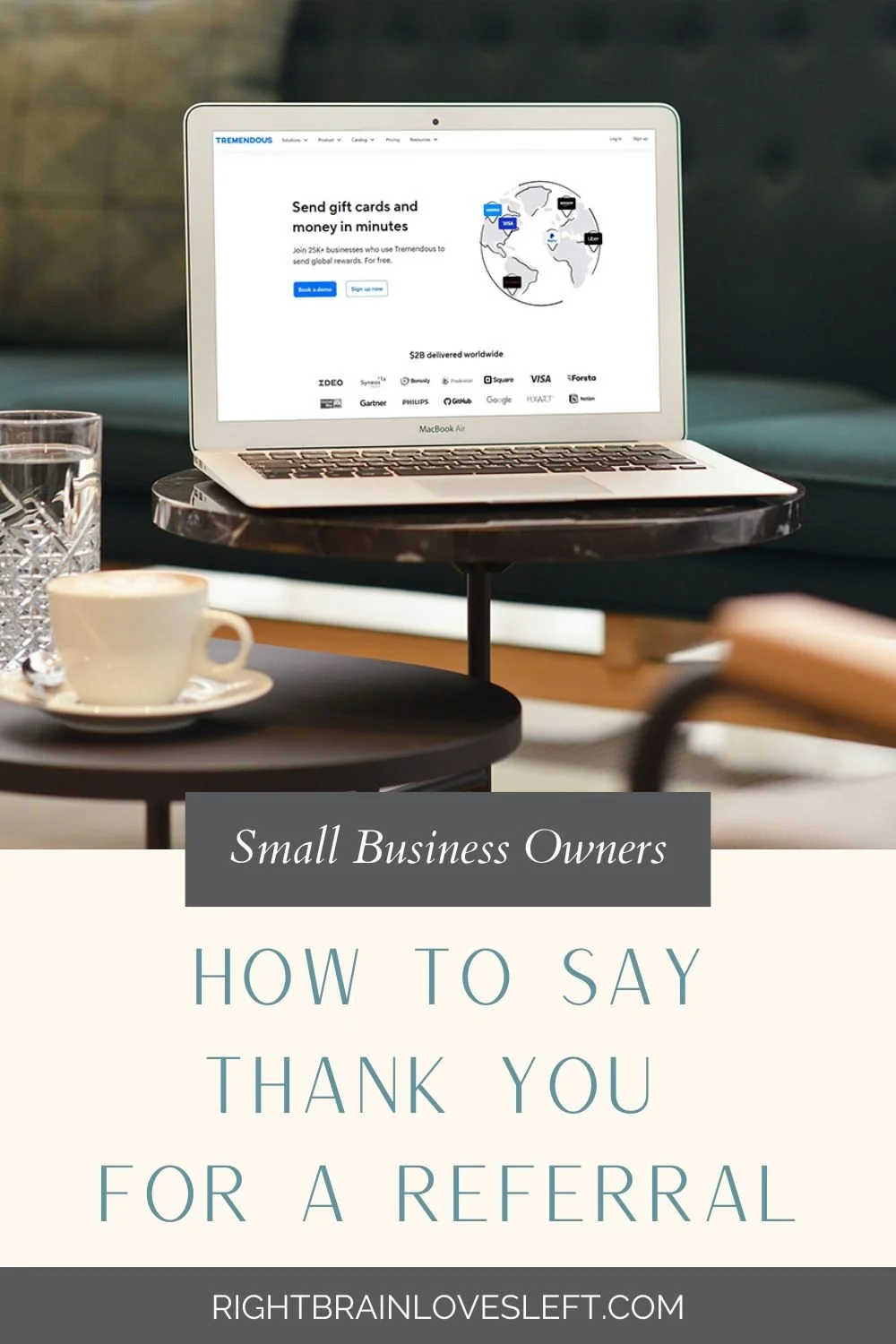
What changed this for me was a tool called Tremendous. Here is how it works. You put money into an account, in whatever amount works for you, since there is no minimum balance required and no account fees. When you want to thank someone, you send them a reward instead of a specific gift card. They open a link and choose what they want, from thousands of gift cards, a straight cash payout, or a donation to one of the nonprofits in the catalog. You are not left guessing what to pick, since the choice moves to the person who knows their own preference. You can also add a short personal note, so the referral gets tied to a real message from you, not just a code in an email.
How to thank a client for a referral, step by step
Fund an account with whatever amount fits your budget. There is no required minimum to get started.
When a referral comes in, send a reward with a short personal note thanking that person by name for what they did.
The recipient opens the link and picks what they want, so the guessing moves off your plate entirely.
I've used it myself to send a thank you, and I like a tool that makes things easier for both sides and lets the other person decide. It is free to set up, and you only pay for the rewards you send, so there is no ongoing cost sitting in the background of your business the way a subscription or a formal loyalty platform would be. I'm not part of any affiliate program with them, I just like the tool enough to pass it along.
Tremendous is also an established platform, not something obscure. It holds a 4.8 out of 5 rating on G2 across more than 1,200 reviews, and it shows up on the major B2B software review sites, which is generally a sign that a company is real, sizable, and has been around long enough to build a track record.
Why this approach works better than the standby options
A gift card asks the giver to guess. A reward asks the recipient to choose, which removes the guesswork and the risk of picking wrong. It also removes the delay, since sending a reward takes a few minutes rather than a trip to the store, so your thank you can go out the same day instead of getting pushed to "this weekend" and then forgotten.
There is also a flexibility that a single gift card cannot offer. Some people want a gift card to their favorite coffee shop. Some would rather have cash toward something practical. Some would rather the money go to a cause they care about instead of coming to them at all. A tool that lets the recipient pick removes you from that decision entirely, and it means your thank you fits the person instead of fitting whatever you happened to grab at checkout.
Think about the referrals you have gotten this year. Some came from clients, some from other business owners in your network, some from people who have never hired you at all and just believe in the work. A single gift card treats all of them the same way. Letting each person choose their own reward respects that they are not the same, even though the thank you itself takes you the same five minutes either way.
When to send a thank you for a referral
You do not need a formal referral program to make this a habit. The simplest version is the most effective one: when someone sends you business, whether that's a single introduction or a client who becomes a repeat source of referrals, send a reward within a day or two while the moment is still fresh. You do not need a large amount to make the gesture land. A modest reward sent right away, with a personal note attached, says more than a bigger one that arrives weeks later.
If referrals carry any weight in how your business grows, and for most small business owners they do, this is worth setting up before you need it. Put a small amount into an account now, so the next time someone sends you a referral, thanking them is a five-minute task instead of a to-do item that sits for two weeks.
A system, not a scramble
The idea that pulled me toward this in the first place was simple. Gratitude works best as something you do, not just something you feel. Feeling grateful for the referrals and the trust that got me to Minnesota for that AI build was real, but it did not do anything for the people who sent those referrals my way. Sending a reward did. A system like this turns the thank you into an action you can take in minutes, rather than a good intention that competes with everything else on your plate that week.
If you have already found your own way of doing this, that is worth holding onto. The point is not that everyone needs the same tool. The point is having some system at all, so the next referral does not sit there for two weeks while you decide what to do about it.
Frequently asked questions
What is the best way to thank a client for a referral?
Send something personal and timely rather than a generic gift card. A tool that lets the recipient choose their own reward, paired with a short personal note, removes the guesswork and gets the thank you out while the referral is still fresh.
How much should I spend to thank someone for a referral?
There is no fixed amount, and it does not need to be large. A modest reward that fits your budget is enough, since the gesture and the personal note behind it carry more weight than the dollar amount.
Do I need a formal referral program to say thank you?
No. A simple, repeatable habit works fine for most small businesses. The goal is a system you can act on quickly, not a formal program with rules and tiers.
How soon should I thank someone for a referral?
Within a day or two, while the referral is still fresh in both of your minds. A prompt thank you tied clearly to the reason you're sending it lands better than a bigger gesture that arrives weeks later.
Are there alternatives to Tremendous?
Yes. Tools like Tango and Giftogram work in a similar way, letting a business fund an account and letting the recipient choose their reward. Tremendous is the one I use and can speak to directly, largely because it is pay as you go with no account fees and no minimum, which suits sending occasional personal thank yous rather than running a large recognition program.
Want more of this kind of small business strategic thinking in your inbox? Join the Thinking Ahead newsletter →