
How to Turn One Product into a Week of Content
It makes me a little sad every time I see it.
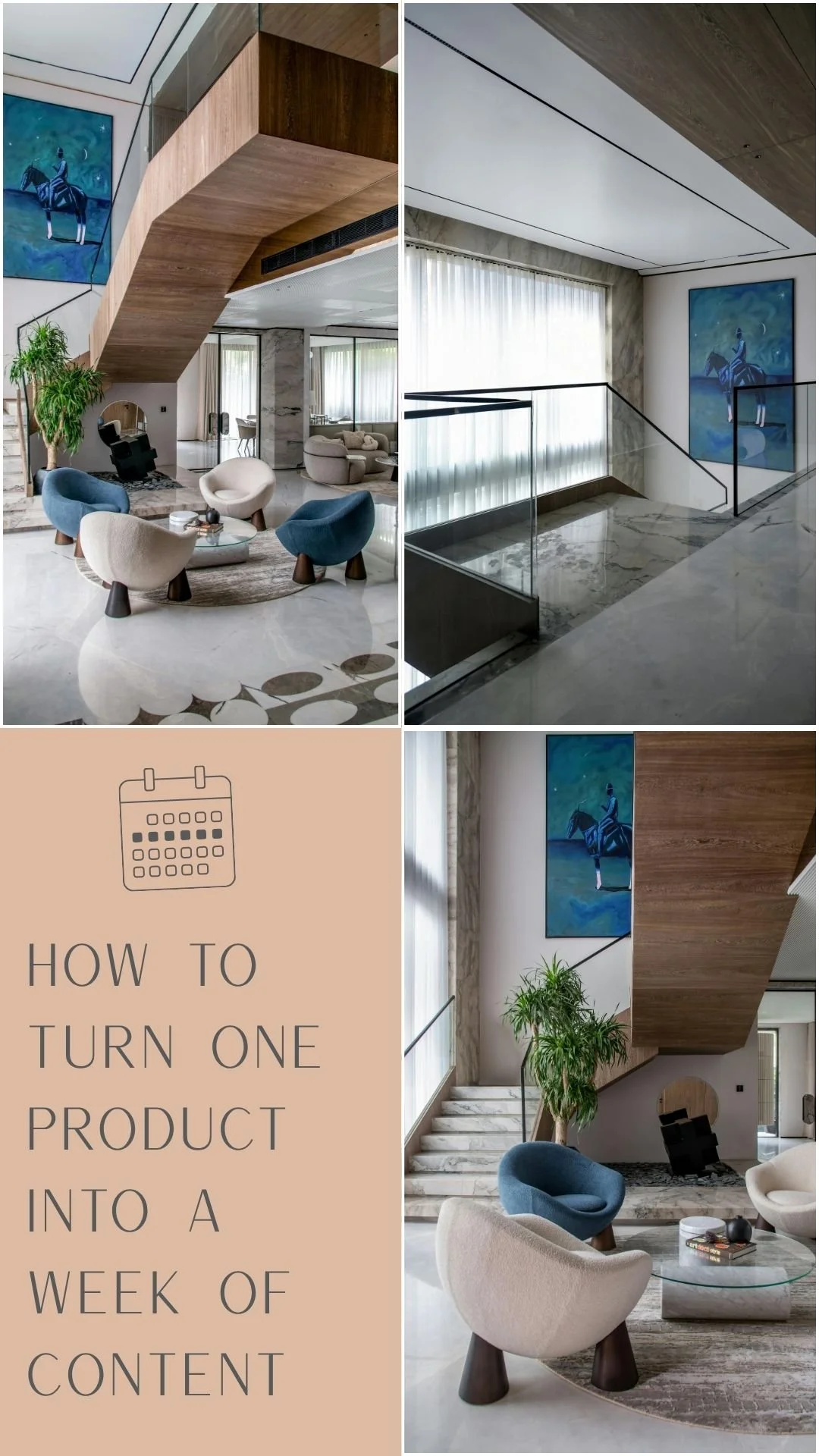
A beautiful set of product images, thoughtfully styled and professionally captured, full of texture and possibility, shared once and then never used again.
Not because the work wasn’t good or because it didn’t matter, but because there wasn’t a plan for what came next. This happens all the time with interior design and construction products. A new finish arrives, samples are photographed, sometimes there is even a full installation, and it gets posted once or twice before disappearing into the archive.
This is where marketing begins to feel heavy, because the pressure to come up with something new starts all over again, even though you already have strong content sitting right in front of you. What if instead, that one product became a full week of content, not by repeating yourself, but by showing it in ways that actually help your audience understand it, imagine it, and remember it.
Why This Matters
When you reuse a product intentionally, you are not being repetitive. You are being clear, and clarity is what helps your audience actually connect with your work over time.
Most people are not seeing every post you share, and even when they do, they are not taking it all in at once. Repetition with variation gives your work more than one chance to land, which is what makes it effective.
It also creates consistency in your marketing without requiring constant new output. Instead of chasing new content, you are building depth with what you already have, which is a much more sustainable way to show up.
A Simple Weekly Structure
Here is one way to turn a single product into a full week of content in a way that feels natural and useful, not repetitive
Day 1: Introduction
Start simple and let the product speak for itself. Share it clearly so your audience understands what they are looking at without needing a full explanation.Day 2: Detail
Zoom in on the elements that make the material interesting. Texture, movement, edges, and finish are often what draw people in and help them imagine it in their own projects.Day 3: Context
Show where this product belongs. This could be residential, hospitality, feature walls, cabinetry, or ceilings. Giving it context helps your audience place it into real-world use.Day 4: Process
Offer a glimpse behind the scenes. This does not need to be complicated. A sample board, a work in progress, or even a quick moment before completion can build trust and show your level of expertise.Day 5: Pairing
Talk about what works well with it. This might include complementary materials, color palettes, or lighting conditions. These details are especially helpful for designers and decision-makers.Day 6: Application
If you have an installed example, share it here. If not, walk through how it is typically used. This is where the product starts to connect more directly to results.Day 7: Reminder
Bring it back one more time with a different image or perspective. This is not about repeating yourself. It is about reinforcing something worth remembering.
What This Solves
Most businesses do not have a content problem. They have a usage problem.
There is already strong work being created, photographed, and shared. Without a plan, it gets used once and then set aside, which creates the false sense that more content is needed.
With a simple structure in place, that same content becomes a steady and reliable marketing system. It reduces decision fatigue, builds consistency, and allows your audience to better understand the value of what you offer.
A More Manageable Approach
Marketing does not need to feel like constant reinvention or pressure to keep up.
It can be something you return to, something you build over time, and something that supports your business instead of draining it. When you start using your content this way, you will likely realize you already have more than enough to work with.
It just needs to be used with intention.
Want More Like This
If this way of thinking about marketing feels like a better fit, you are exactly who I write for.
I share practical, grounded strategies like this in my weekly newsletter, Thinking Ahead. It is designed to help you simplify your marketing, use what you already have, and build a system that actually works.
If you’d like more ideas like this, you can sign up using the form on this page.