
Most small business owners don’t need more ideas. We have so many ideas!
What we need is less mental clutter. That’s the constant mental noise of unfinished thoughts, revisited decisions, and marketing that always feels slightly unsettled. Loud strategies promise breakthroughs. Quiet habits do something more useful: they reduce friction in small but meaningful ways.
These habits aren’t about doing more, as they are about deciding less often about the same things. Over time, that’s what makes a business feel lighter, clearer, and more manageable.
Why Quiet Habits Matter in Small Business
Quiet habits work because they don’t rely on motivation or perfect weeks. They support you on busy days, distracted days, and the days when your energy is already spent elsewhere.
Instead of asking you to push harder, these habits remove unnecessary decisions, simplify recurring choices, and create defaults you can return to. That’s where sustainable momentum comes from.
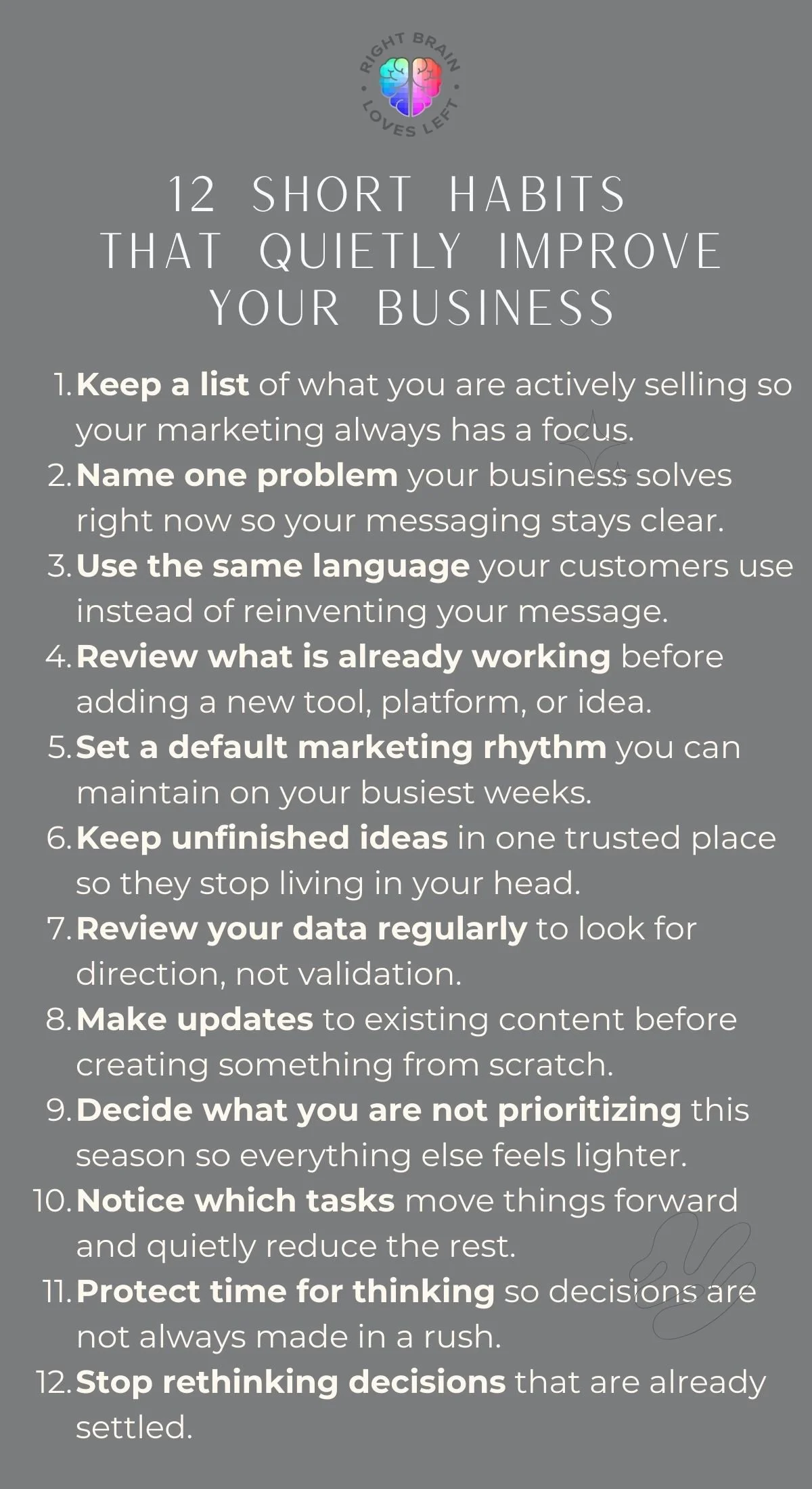
The 12 Short Habits
1. Keep a list of what you are actively selling so your marketing always has a focus
When everything is an offer, nothing is. A short, current list removes the need to decide what to promote every time you sit down to market your business.
2. Name one problem your business solves right now so your messaging stays clear
Your business can solve many things, but clarity comes from choosing what matters most in this season. This habit keeps your message steady instead of scattered.
3. Use the same language your customers already use instead of reinventing your message
Marketing gets easier when you stop translating. Familiar language builds trust faster than clever phrasing ever will.
4. Review what is already working before adding a new tool, platform, or idea
New tools feel productive. Refinement actually is. This habit prevents unnecessary complexity from quietly creeping in.
5. Set a default marketing rhythm you can maintain on your busiest weeks
A realistic rhythm beats an aspirational one every time. This habit keeps marketing possible even when life gets full.
6. Keep unfinished ideas in one trusted place so they stop living in your head
Mental clutter creates invisible pressure. A single place for ideas allows you to think clearly without needing to act immediately.
7. Review your data regularly to look for direction, not validation
Data is most useful when it informs decisions rather than emotions. This habit keeps numbers in their proper role.
8. Make updates to existing content before creating something from scratch
Starting over is tempting. Improving what already exists is usually more effective and far less draining.
9. Decide what you are not prioritizing this season so everything else feels lighter
Letting go of temporary priorities creates space without closing doors permanently. This habit reduces guilt and overcommitment.
10. Notice which tasks move things forward and quietly reduce the rest
Not everything needs to be eliminated loudly. Some things just need to be done less often.
11. Protect time for thinking so decisions are not always made in a rush
Good decisions rarely come from urgency. This habit creates room for perspective instead of reaction.
12. Stop rethinking decisions that are already settled
Few habits reduce mental load as effectively as this one. Settled decisions are anchors. They free attention for the work that actually matters.
How These Habits Support Manageable Marketing
Marketing feels heavy when it’s constantly about what to post, where to show up, what matters right now. These habits remove that constant decision-making and replace it with clarity and defaults.
This is the foundation of manageable marketing. Not more effort, but more intention.
A Natural Next Step
If this list resonated, it’s likely because you don’t need another tactic. You need a way to organize the ones you already have.
In my free masterclass, The 3-Step Framework to Manageable Marketing, I walk through how habits like these fit into a simple structure that helps marketing feel supportive instead of overwhelming. It’s an overview designed to help you see how everything connects before you build. Here’s to easing your marketing and making it more manageable, even on your busiest days!